
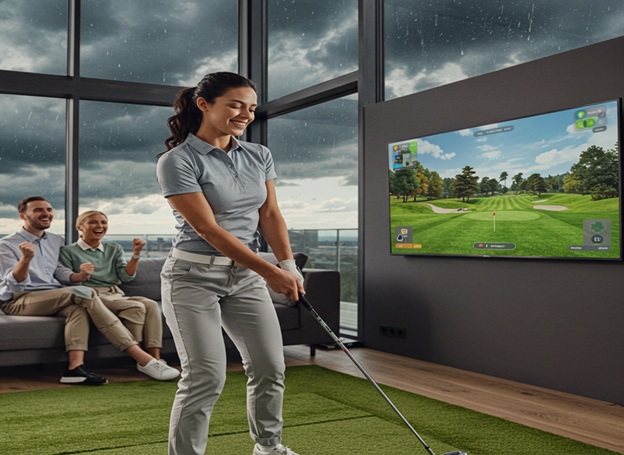
Golf simulators have become a staple for players who want to train year-round, host virtual rounds, or simply enjoy the game from the comfort of home. But buying one isn’t just about picking the flashiest model—it’s about understanding what you need, what you’re getting, and how to maximize your investment. Whether you’re building a garage setup or a full simulator room, here’s what to know before you buy—and how to pair it with the right golf swing aids for optimal results.
1. Know Your Space
Before browsing simulator packages, measure your available area. Most setups require:
- Ceiling height: Minimum 8.5–10 feet
- Width: At least 10 feet for swing clearance
- Depth: 15–20 feet for full projection and ball flight
Smaller spaces can still accommodate compact systems like Phigolf 2 or SkyTrak, which don’t require ball impact or full enclosures.
2. Understand the Core Components
A complete simulator setup typically includes:
- Launch monitor (tracks ball and club data)
- Impact screen or net
- Projector or display
- Hitting mat
- Simulation software
Some packages also include lighting, sound systems, and swing cameras for enhanced feedback.
3. Choose the Right Software
Simulator software determines your gameplay experience. Popular platforms include:
- E6 Connect: Realistic graphics and multiplayer modes
- WGT Golf: Famous courses and online play
- GSPro: Highly customizable with community-created content
Make sure your chosen simulator is compatible with your preferred software.
4. Match It with Golf Swing Aids
To get the most out of your simulator, pair it with golf swing aids that reinforce proper mechanics. These include:
- Tempo trainers for rhythm
- Wrist guides for clubface control
- Impact bags for contact awareness
- Alignment sticks for setup precision
Swing aids help translate simulator feedback into real-world improvement.
5. Budget Wisely
Simulator prices range from $500 to $25,000+. Here’s a quick breakdown:
| Tier | Price Range | Ideal For |
| Entry-Level | $500–$2,000 | Beginners, small spaces |
| Mid-Range | $2,000–$8,000 | Home users, serious players |
| Premium | $8,000–$25,000+ | Coaches, commercial setups |
Factor in software subscriptions, accessories, and potential upgrades when budgeting.
Final Thoughts
Buying a golf simulator is a big step—but with the right planning, it’s one of the most rewarding investments a golfer can make. Whether you’re chasing lower scores or hosting virtual tournaments, understanding your space, goals, and gear ensures you get the best value. And when paired with smart golf swing aids, your simulator becomes more than a game—it becomes a training ground for lasting improvement.
